Creating detailed 3D assets was once a process that required sophisticated skills, expensive software, and several hours of manual work. Designers were required to refine their textures and improve models, and also creating sculpted geometry. Artificial Intelligence has altered this process in a dramatic way. Thanks to modern tools today, it’s possible to generate the 3D model using images quickly this makes 3D design easier for professionals, businesses and even beginners.
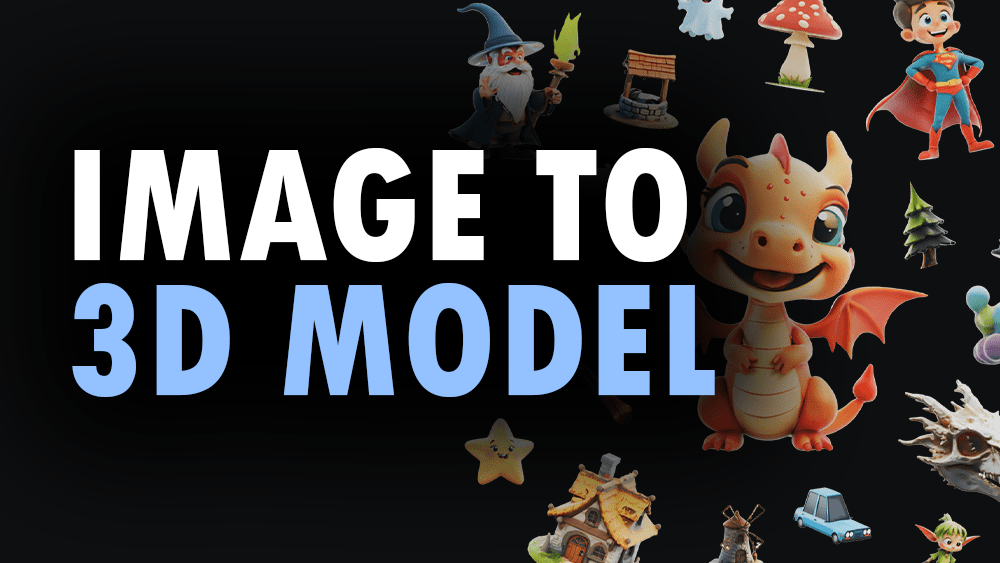
3D AI Studio shows how the technology has advancing and has tools that allow designers to move from an idea to a final model in less than a quarter of the traditional time.
The Increasing Demand for Faster 3D Creation
The need for top-quality 3D content is growing in many sectors. The need for realistic visual assets is essential to present ideas and draw audiences in many industries which include gaming, product design and film, architecture and ecommerce. To meet ever-growing demand, teams are searching for more efficient methods to produce models with no compromise on quality.
This is where image to 3D model free tools and AI-powered workflows play an important role. Instead of launching with a complex modeling software, creators can upload their images and let AI analyze the shapes, edges, and textures. The computer then converts the visual information into a useful 3D structure.
Teams can experiment with greater freedom, and reduces the time spent creating assets.
How Photo-to-3D Technology Works
When the photo-to- 3D model process starts Artificial Intelligence examines the image in detail. It recognizes patterns, predicts the distance of objects, and then reconstructs them in three dimensions. Advanced algorithms trained on large datasets help ensure that the generated models have realistic dimensions and surfaces.
This technology is particularly useful for rapid prototypes. Designers are able to take photos of sketches of a concept or physical object and convert the image into a digital model to allow for further improvement. Developers can also design placeholder assets in a short time, allowing them to try out designs or environments before investing time in highly detailed modeling.
Platforms like 3D AI Studio often include functions that automate other processes like texturing and mesh optimization, making the end product suitable for real-world applications.
The benefits for businesses and creators
Accessibility is an important benefit of the picture-to- 3D models technology. AI-powered models remove the technical barriers to 3D modeling, making it possible for greater numbers of people to be involved.
Another major benefit is the speed at which it can be done. Automated the generation of retopologies and textures eliminate repetitive tasks, allowing creators to focus on their creativity and design instead of technical procedures. Faster production cycles result in faster delivery of projects and lower costs.
Marketing teams can develop visual content more rapidly, educators can build interactive learning tools and product designers can show prototypes earlier in the design process.
Flexible Workflows and Organised Workflows Options
Modern AI-based platforms do much more than just create models; they also help to manage their use. Asset libraries let users manage and store projects in a systematic manner. This makes it easier to manage files and search for them.
Compatibility is also important. A 3D model generated from images is often exported to a variety of formats, allowing smooth integration with games engines, rendering tools, and 3D printing equipment. This flexibility allows generated assets can be used in a wide range of professional workflows.
Looking Forward the Future of 3D Design Powered by AI
Artificial Intelligence is advancing quickly and the possibilities for 3D creation are increasing. The future tools will be able to create complex environments and models in addition to automating additional steps in the production process.
Platforms like 3D AI Studio will continue to evolve and give creators greater control, flexibility and speed when it comes to creating digital assets.
Conclusion
The ability to convert images into digital objects with realistic features transforms the process of designing. Tools that can convert images conversion to 3D models without workflows can transform a photograph into a 3D model, or even a image into 3D.
With the rapid advancement of technology and the development of technology, creating a 3D design using images will soon become an essential part of modern design. This will enable designers to create their designs faster and with fewer limitations as compared to before.